 TEXTILES.ORG




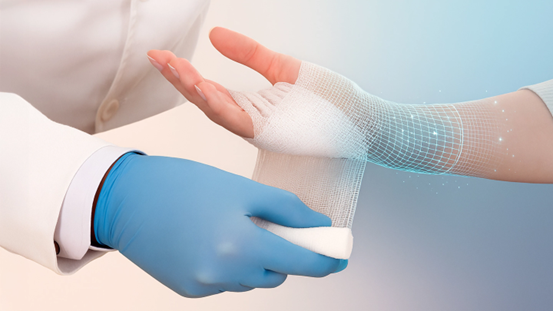
From silver nanofibers to smart, sensory-packed dressings, the next generation of wound-healing technology is blurring the line between biology and engineering. As scientific understanding and technology have improved, so, too, have the approaches developed to aid wound healing and infection control.
Researchers from National Taiwan University (NTU) led a review of recent research into advanced wound-healing technologies published over the last decade. Drawing data from clinical trials, animal studies, and lab experiments that explored new materials, biological agents, and smart delivery systems, the researchers compared these next-gen approaches to conventional dressing and therapies.
“By combining different healing strategies into one coordinated system, we aim to help the body heal itself more effectively and with less scarring,” says the corresponding author, Zong-Hong Lin, Ph.D., a professor at NTU’s Dept. of Biological Engineering.
The skin is made up of three layers: the epidermis, the thin outermost layer, acts as a barrier to germs and prevents water loss; the thicker middle layer, the dermis, contains blood vessels, nerves, sweat glands, and collagen (which gives skin strength and elasticity); and the subcutaneous tissue is the deepest layer. It’s made mostly of fat and connective tissue, which cushions and insulates the body. When a wound occurs, one or more of the skin’s three layers are damaged or destroyed.
The researchers reviewed key technologies, including:
- Nanomaterials, such as silver nanoparticles and nanofibers
- Hydrogel scaffolds and bioactive dressings
- Stem-cell-based and growth-factor therapies
- 3D-printed and electrospun biomaterials
- Smart sensors and electronic skin patches.
Focusing on healing rates, infection control, tissue regeneration, and patient outcomes, the review concluded that next-generation wound-healing strategies significantly outperformed traditional methods in five key ways:
- They provided faster healing and better tissue integration, especially with hydrogel-based scaffolds and nanofiber dressing that mimicked the skin’s extracellular matrix, the complex network of proteins, enzymes and other molecules that provide structural support, elasticity and firmness.
- Next-gen strategies also produced reduced infection rates. Nanoparticle dressing and silver- or zinc-based composites showed strong antimicrobial properties.
- Using growth-factor-releasing or stem-cell-loaded materials produced improved outcomes for chronic wounds, particularly diabetic ulcers and pressure sores.
- Emerging sensor-integrated “smart dressings” that can track pH, temperature and exudate (fluid that leaks out of wounds, including pus) were found to alert healthcare professionals to infection or delayed healing.
- Custom 3D-printed scaffolds made from a patient’s own cells or biopolymers – that is, a move towards personalized medicine – showed great promise for treating complex wounds and burns.
Despite promising lab and early clinical results, the authors note some limitations—principally, the high production cost and limited scalability of bioengineered and nanotech materials; the regulatory and safety hurdles that materials containing live cells or nanoparticles must overcome; variability in study quality (many results come from small, short-term trials or preclinical models). Also, there’s a lack of long-term data on immune responses and the potential toxicity of some synthetic materials.
Nonetheless, the researchers believe that improvements in technology mean that these sorts of next-gen wound healing approaches aren’t going away. The technologies closest to real-world use are:
- Hydrogel and nanofiber dressings, which are already starting to enter clinical practice and are being used to treat burns and diabetic ulcers
- Silver nanoparticle composites, widely used for infection control in chronic wounds
- 3D-printed scaffolds and stem-cell gels that are in early clinical trials for severe burns and reconstructive surgery
- Sensor-enabled dressings, piloted in hospital settings for the treatment of post-surgical wounds and diabetic foot ulcers.
As AI-driven monitoring systems and personalized bio-inks enter the medical clinic, wound care is on the brink of becoming a fully adaptive, data-guided science. The study was published in the journal Materials Today.