 TEXTILES.ORG




Editor’s note: There’s a lot to talk about in natural fiber technologies, so this feature represents just Part I of a two-part article by writer Debra Cobb on the topic this month. Part I focuses on wool and cotton; Part II discusses bast fibers—hemp, flax, jute and ramie. – jp

When it comes to technical textiles, fossil-fuel based fibers have proven themselves with performance, price and popularity, but there are signs that natural fibers are once again finding a seat at the table. Sustainable wool, cotton and bast fibers offer under-appreciated assets that can be exploited for technical and performance textiles.
A recent press release from Messe Frankfurt Exhibition GmbH regarding the upcoming Techtextil 2026 exhibition calls their “Nature Performance” label a key industry trend. According to the organization, “Sustainable fibers and yarns are among the fastest-growing markets in technical textiles: companies worldwide increasingly turn to natural and bio-based solutions—driven by their performance, CO₂ savings, biodegradability, recyclability and independence.”
Wool’s new opportunities
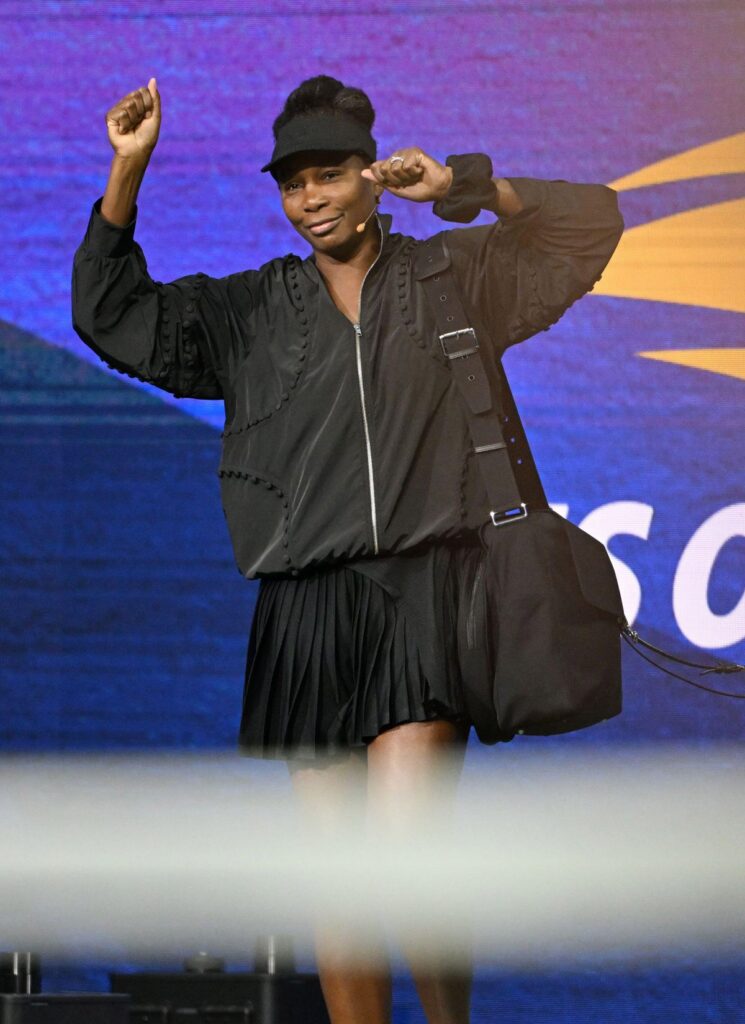
Woolmark, the global authority on Merino wool, is at the forefront of elevating wool’s performance potential through collaborations with leading technical apparel, footwear, automotive and home furnishing partners. Sports, fitness and wellness brands such as Salomon, Tracksmith, Ciele, Under Armour, and The North Face are all using Merino wool; and last year LUAR developed a wool kit in collaboration with Woolmark for tennis star Venus Williams. Trainers enhanced with Merino wool from Salomon and Circle offer comfort, temperature management, and breathability.
Woolmark’s newly appointed managing director, Bryan Fry, explains: “Wool only wins when the whole pipeline wins. From fiber to finished product, we’re focused on making wool easier to process, easier to scale and easier to bring to market.”
Built around Merino wool, the Woolmark Performance Challenge winning idea, “Vaporate,” is an advanced auxetic textile for downhill mountain bike racing. Developed by University of Oregon Sports Product Design Master’s student, Chloe Burchard, the wool-blend fabric delivers support, breathability and abrasion resistance, with a heat-responsive honeycomb structure that opens to enhance ventilation during exertion.
“Vaporate shows how the fiber can meet the demands of modern high-intensity sport while opening new pathways for innovation, reworking moisture-responsive auxetics to support athletes across climates and intensity,” says Julie Davies, general manager, processing innovation and education extension, at Woolmark.
Other types of wool are being applied to industrial and performance-led end uses. Volvo’s first electric car, the XC40 Recharge, features Woolmark-certified wool blend interiors, where benefits include breathability and all-season temperature management. Hainsworth Protective Fabrics has developed wool-rich fire-fighting outerwear, showing how the wool fiber can contribute to safety, durability and comfort in demanding environments.
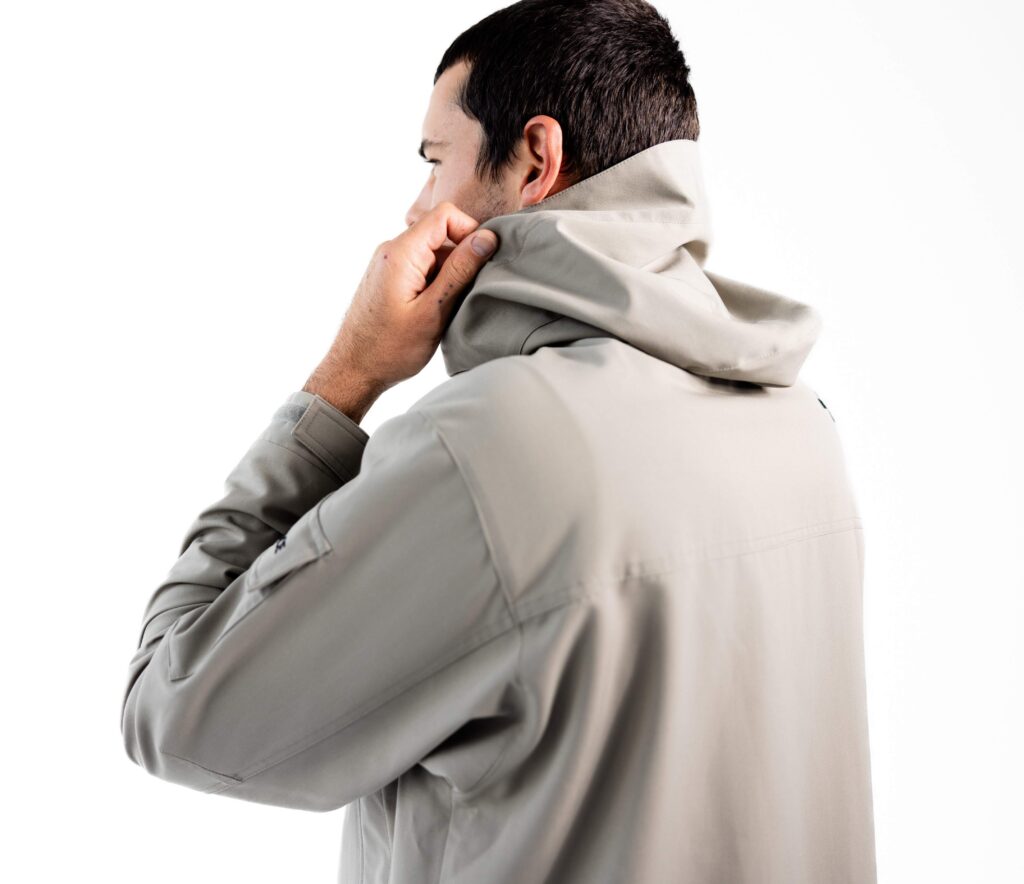
Unbound Merino’s ultrafine Merino wool blend shirt with Spectra® (an ultra-high molecular weight polyethylene (UHMWPE) fiber manufactured by Honeywell) enhances durability and performance. The North Face’s OPTIM™ Merino wool jacket delivers water and wind-resistant properties (without PFAS or chemical DWR treatments). The fabric uses16.5-micron wool fibers that are pre-stretched, spun into yarn and densely woven. When the fabric is wet-finished, the stretch in the fibers is released and the yarns contract, tightening the fabric structure.
Fry continues, “We create demand by opening new opportunities in performance and technical categories, we innovate by solving the challenges that slow adoption, and we educate so the global supply chain can work with wool consistently, reliably and at scale.”
“Partnering with Woolmark unlocks access to the world’s leading wool experts, technical specialists and global industry networks. Because as the global authority on wool, we provide unparalleled technical leadership, standards and applied expertise that help the entire pipeline operate with greater confidence, consistency and alignment.”
According to the World Textile Information Network, wool’s global market value is expected to nearly double from USD $34.9 billion in 2022 to $63.2 billion by 2033.
Transformative technologies
Synthetic fibers, by nature of their manufacturing process, are easily enhanced through tweaks in denier, cross-section, texturing or additives in the masterbatch. But natural fibers can also be manipulated to boost performance via new technologies, meeting the need for alternatives to microplastics, PFAS, and permanent landfilling.
New Zealand’s Nuyarn® has found a way to upgrade the performance of Merino wool fiber for knitwear and base layers, improving on the fiber’s natural thermoregulation, breathability, and the ability to absorb and manage water vapor via a twist-free spinning technology that drafts superfine Merino with fine-denier nylon filament. The technology results in improved elasticity without spandex, quicker dry time, increased thermoregulation at lighter weights, and improved strength and durability.
Nuyarn adds to the proliferation of performance products made of natural fibers, working with brand partners such as Artilect, Kuiu, Odlo, Ibex, Ortovox and HOKA; and has won several ISPO awards. According to Nuyarn’s VP of Sales, Monica Ebert, “Nuyarn shows that wool’s place in technical textiles extends well beyond base layers. When Merino is spun differently, it can deliver lightweight performance, durability, thermoregulation and a softer hand-feel in ways that open the door to everything from technical apparel to outdoor luxury.”
“We’re also using the technology to rethink how stronger wool types can be used, helping turn fibers once limited to industrial applications into high-durability products like footwear liners,” Ebert continues. “For me, that’s the real opportunity: using innovation to broaden where natural fibers can perform and where they belong.”
New functional cotton
Until recently, the concept of “functional cotton” was largely achieved through chemical fabric finishes. SolucellAir®, a patented yarn technology developed by BYR International, takes a fundamentally different approach. It’s based on spinning cotton around Solucell®, a proprietary dissolvable filament yarn.

“Solucell is a proprietary material designed to easily chemically degrade in alkali conditions, ‘dissolving’ during fabric manufacturing,” explains BYR Director of Operations Lorenzo Rescali. “Initially it was developed specifically to replace polyvinyl alcohol (PVA) in the production of towels to reduce the resulting pollution (50 percent chemical oxygen demand reduction and 35 percent solid waste reduction), while also saving manufacturing costs. From Solucell material we developed different technologies for home and apparel textiles, such as SolucellAir.”
Once Solucell is dissolved, the result is a three-dimensional hollow-core, 100 percent cotton yarn that naturally enhances performance attributes: soft touch, reduced weight, moisture management, thermoregulation and increased air permeability. This unique yarn architecture significantly improves overall garment comfort, making fabrics adaptable to a wide range of climates and activities—effectively transforming cotton into a true performance fiber, without relying on synthetic additives or chemical treatments.
SolucellAir is already used across both apparel and home textiles, with applications in premium products from brands such as Kjus (golf), ASRV Essentials, flannels from Timberland and Kathmandu, and Levi’s®Thermodapt denim.
BYR has introduced a new yarn category, SpunFil, which combines short staple fibers and continuous filaments into hybrid structures. This creates new possibilities across multiple segments, from technical textiles to performance wool blends and fine warp-knitted fabrics based on natural fibers.
“When engineered the right way, cotton stops being basic—and becomes performance,” says Rescali.
Debra Cobb is a freelance writer with expertise in the textile industry. She is based in Greensboro, N.C.
Look for Part II of this article June 24 on this site.