 TEXTILES.ORG



Archives
-
2026
-
2025
-
2024
-
2023
-
2022
-
2021
-
2020
-
2019
-
2018
-
2017
-
2016
-
2015
-
2014
-
2013
-
2012
-
2011

From prototype to product
July 13th, 2026
Researchers from North Carolina State University and Rice University have created a non-toxic, stretchable battery that operates by extracting moisture from the ambient environment. The batteries could be useful in IoT applications. Image: Rajaram Kaveti. The Global Electronics Association through its IPC standardization efforts has been a driving force in global electronics standardization for nearly […]
Nautilus Defense announces e-textile breakthrough
July 15th, 2024
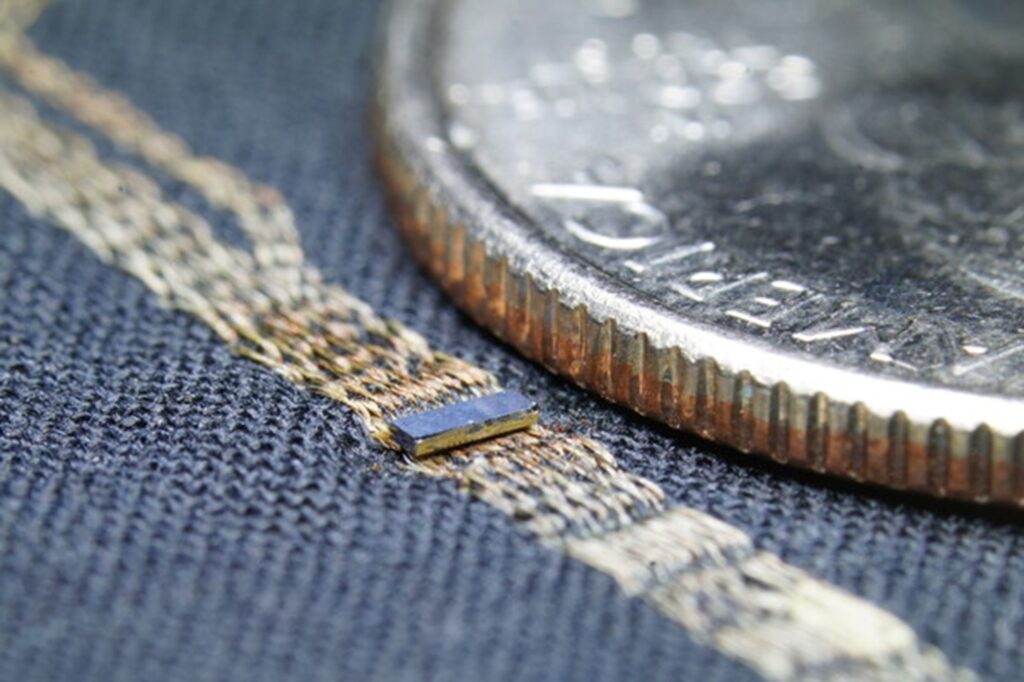
An IUVA-developed chiplet is directly attached to 2D textile network at a 180µm pitch. Photo: Nautilus Defense. Rhode Island defense technology company Nautilus Defense announces a critical advancement in the field of electronic textiles by successfully demonstrating the world's first direct die attach of chiplets to embroidered conductive yarns at a 180µm pitch, a space […]

Electronics and materials: an integrated approach
April 12th, 2021
Researchers at the NRC have developed a conductive aramid, achieved by chemically altering the surface before using an electroplating treatment to apply the silver conductive ink. Photo: The National Research Centre (NRC), Canada. Flexible hybrid electronics show progress with advances in sensory yarns and fabrics. by Dr. Marie O’Mahony Flexible Hybrid Electronics (FHE) bring together capabilities from electronics, […]