 TEXTILES.ORG




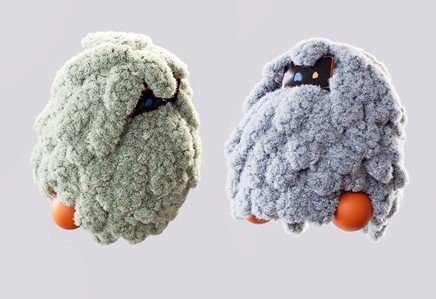
POCO is a soft, robotic companion developed by designer Mehrnaz Amouei that examines alternative relationships between humans and artificial intelligence. The project focuses on interaction models based on presence, responsiveness, and clearly defined limitations, rather than systems that interpret or direct emotional states.
As AI increasingly operates within personal and emotional contexts, questions emerge around dependency, interpretation and control. POCO addresses these concerns by proposing a relational framework in which the system functions alongside the user without assuming authority. Instead of diagnosing or guiding behavior, the device is designed to respond, reflect and maintain boundaries that remain visible to the user.
The project had a year-long research process involving qualitative interviews, interdisciplinary input, and iterative prototyping. Findings indicated a preference for systems that offer availability and responsiveness without projecting certainty or control. In response, the design introduces the concept of ‘constructive interdependence,’ where limitations are embedded as part of the interaction model. The system communicates what it can and cannot do through its behavior and states.
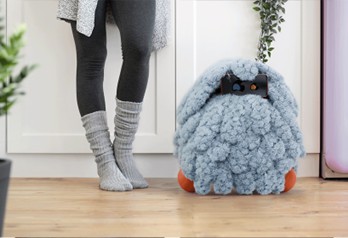
Physically, POCO is developed as a soft, tactile object that connects to a smartphone, which functions as its computational component. Interaction is based on touch, using capacitive sensors that respond to gestures such as holding or stroking. Movement is expressed through slow, rhythmic actions that resemble breathing.
Engagement with the device is structured as a reciprocal process. The system does not initiate interaction independently but responds to user input. Through its integration of material, behavior, and interaction logic, POCO robot companion positions AI as a participant within a relational system rather than a directive tool. The project frames trust not as a function of expanded capability, but as a result of transparency, limitation and balanced interaction between user and device.