 TEXTILES.ORG




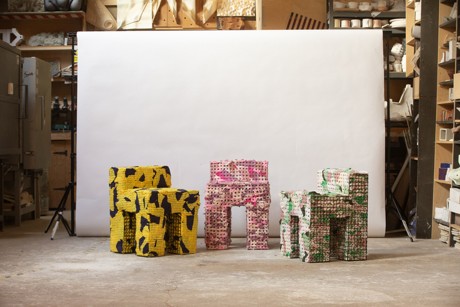
Fast Fashion Architecture is a research project developed by London-based multidisciplinary designer Taylor Leung of 12103 Design Studio in collaboration with several other designers at The Bartlett School of Architecture. The project investigates how discarded synthetic textiles can be transformed into a construction material for furniture, structures and architectural space.
The project examines the relationship between the production methods of fashion and architecture, focusing on shared approaches to textiles, material efficiency and flexibility. With widespread concerns about disposable fast fashion, the project explores how synthetic garments and factory offcuts can be redirected into a new material system with extended applications and lifespans. The project works primarily with nonbiodegradable synthetic garments and factory waste containing woven polyester fibers. Because these fibers are difficult to separate or reprocess through conventional recycling methods, the project uses heat to fuse the textiles together.
Garments are first sorted and cut according to their color and material composition, then packed into mild-steel cages and heated without adhesives, resin or additional binders. The thermoplastic fibers bond to one another, producing porous units that retain the colors, patterns, textures, and irregularities of the original garments.

To control the heat-fusion process, the team adapted a desktop 3D printer into a semi-automated machine described as a form of ‘digital soldering’. Five heated tips move through the compressed textile using customized G-code, allowing the bonding pattern to be adjusted through variations in temperature, density, and spacing. The process combines the repeatability of digital fabrication with the variable characteristics of discarded textiles. Each material unit retains differences inherited from the garments, while the digital system provides control over how the fibers are bonded and how the resulting material is configured.
Further speculative studies extend the system to the scale of a three-story house, examining how the heat-fused textile units could move beyond individual objects and become part of a larger architectural construction system.