 TEXTILES.ORG




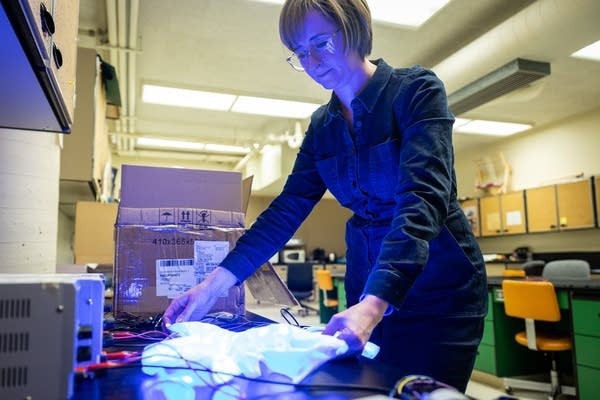
Inspired by her experience with her own infant, Lucy Dunne decided to find a better way to treat jaundice in a newborn, An MPR News story reports. Dunne is the founder and co-director of the University of Minnesota’s College of Design Wearable Technology Lab. So, one project she is currently focused on is a specialized onesie for newborns that treats jaundice while allowing caregivers to hold and comfort them during treatment.
“We’ve been working on this idea of trying to take that light therapy that treats jaundice and bring it into a onesie that fits close to the baby’s skin,” Dunne says.
Up to 60 percent of newborns develop jaundice, a common and easily reversible condition that causes a yellow tint to their skin and eyes. Though jaundice typically occurs within the first few days of life and is usually harmless, some infants require therapeutic phototherapy, or blue light therapy, in the hospital or at home to prevent complications. This treatment often separates them physically from their loved ones.
At the Wearable Technology Lab, scientists are developing wearable apparel that combines traditional garments with new technology to make clothing more useful for people – from infant to elderly. Other clothing designs assist with upper-limb mobility for children with mobility impairments.
The research team and their students also recently returned from a visit to NASA, where they presented findings on engineering solutions for garment challenges encountered by astronauts during human spaceflight. Brad Holschuh, associate professor and lab co-director, said they are working on compression stockings for astronauts that move from loose to tight-fitting.
“It’s a space flight example, but it introduces a new paradigm for what clothing can do,” Holschuh said. “Compression garments in everyday life are a billion-dollar industry.”
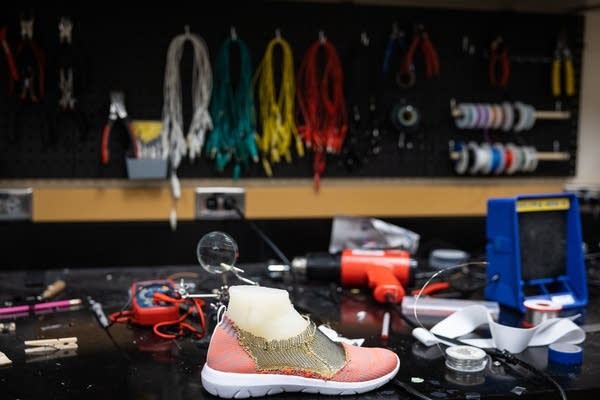
Holschuh said that people wear compression garments for many different health conditions, such as diabetes, heart disease, lymphedema or burn recovery, but relying solely on stockings or large inflatables is an outdated approach, So, researchers are examining compression garments beyond just circulatory support.
“People use compression garments as a behavioral intervention,” Holschuh said. “Folks that have autism or sensory processing disorder oftentimes use stimulation of pressure on their upper body as a means of interrupting a mental health episode.”
It is crucial to expose a baby’s skin to blue light treatment because the light alters bilirubin — a naturally occurring yellow-pigmented chemical in red blood cells that causes jaundice. Newborns typically have higher bilirubin levels than adults because they possess a larger number of red blood cells, which break down more rapidly, leading to increased bilirubin production. Their livers are also still maturing and are less efficient at removing bilirubin from their bodies.
Dr. Katie Satrom is a neonatologist and an associate professor of pediatrics at the University of Minnesota. Her research focuses on managing neonatal jaundice in preterm infants and in infants born in low-resource settings around the world. Satrom says that despite the fact that blue light therapy has been an effective and safe treatment for nearly 60 years, some people believe that the issue has been completely resolved.
Researchers like Dunne are actively working to enhance the delivery of this therapy and the results from her onesie prototype are showing great promise.
Source: MPR News