 TEXTILES.ORG




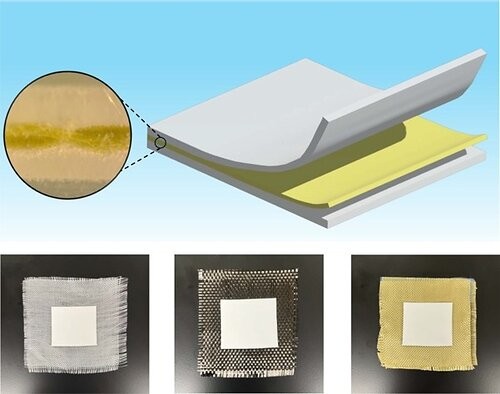
Radiative cooling presents an energy-efficient way to keep buildings and wearables cool. While previous studies have developed passive cooling fabrics with high infrared emissivity and low solar absorption, these materials are generally designed for near-ambient conditions and perform poorly under mechanical stress and extreme heat, limiting their use in demanding applications, such as for protective gear for firefighters and defense personnel.
Addressing these limitations, researchers working on the electronics organization IEEE’s study presented a passive daytime radiative cooling (PDRC) coating for woven fabrics and evaluated their feasibility for both ambient and extreme environments.
“Radiative cooling wearables that perform reliably under both outdoor sunlight and extreme thermal conditions remain largely unexplored,” explains Dr. Lili Cai, the corresponding author of the study. “Addressing this gap is crucial for designing more effective cooling fabrics and protective gear.”
The researchers fabricated PDRC-coated textiles using glass fiber, carbon fiber, and Kevlar. The silicone-based coating containing zirconium oxide nanoparticles was applied to both sides of 1–2 mm-thick fabrics. The coated textiles achieved high solar reflectance (92.8–96.5 percent) and infrared emissivity (95.3–96.3 percent), outperforming uncoated fabrics and commercial cotton. Notably, the coated glass fiber fabric maintained an average temperature 8.3°C lower than cotton under sunlight.
The fabrics also demonstrated excellent durability, retaining their optical performance after flame exposure and repeated washing while remaining breathable and water resistant. Simulations further identified near-infrared reflectance as a key factor for improving cooling performance in high-temperature environments such as fires.
The findings highlight the potential of these durable radiative cooling textiles for next-generation personal protective equipment, emergency response gear, and energy-efficient thermal management applications.
The original paper, “Assessing Radiative Cooling Textiles for Extreme Thermal Conditions,” was published in the IEEE Journal of Selected Topics in Quantum Electronics.
Source: IEEE Photonics Society