 TEXTILES.ORG




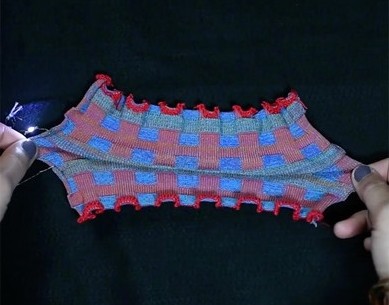
Textiles and other manufacturing sectors are witnessing a revival in terms of investments and government support. This is important for developed economies, such as in the U.S., the EU and U.K., which need to focus on advanced textiles manufacturing and research to be competitive in the global marketplace.
In the U.S. today, only three percent of commodity textiles used by consumers are domestically manufactured. Even in the medical textiles category, low-end products, such as non-medical spunmelt face masks, and medical gowns and drapes, are imported from China due to economics. But this scenario changes when it comes to smart products, particularly those that address national security and defense needs.
Emerging and growing
The textiles industry includes products from commodity materials to advanced textiles. Smart textiles, however, go beyond “advanced” to materials with active and interactive functionalities. These products prioritize functional properties, such as signal detection, stimuli response and temperature adaptability, and are designed to address a range of safety, health and comfort needs.
These functionalities can be imparted by different means, such as external mechanical stimuli, chemical application, enhancement of inherent properties of basic components, and by incorporating electronic gadgets. Clearly, the smart textiles industry must have an understanding of more than fibrous materials; it relies on, and must incorporate knowledge about, medical device manufacturing, electronics, coatings and many other areas of expertise.
The smart textiles sector is a growth area also because it lends itself to creating SMEs (small-to-medium enterprises) that tend to focus on innovation and research. In recent years, the U.S. government has been active in creating manufacturing innovation hubs to strengthen its high-end manufacturing catering to national security and defense. Just this month (August 2026) the U.S. Dept. of Defense funded the FutureTEX public-private partnership program with an upper limit of $480 million over 10 years.
North Carolina State University (NC State), Gaston College, Georgia Tech, Drexel University, the University of Massachusetts Lowell, and the nonprofit Industrial Sewing and Innovation Center are founding members of this initiative, which will receive $36 million as a first-year allocation — clear evidence of the U.S. government’s support for growing the smart textiles sector. (See “Initiative to bolster defense textile manufacturing announced.”)
Incorporating new technologies
Although the smart textiles sector is still emerging, it has evolved to include many sophisticated medical wearable textile devices and products. New manufacturing techniques, including 3D printing, ink jet printing, nanotechnology and advanced textile manufacturing technologies are being explored to develop flexible and durable wearables.
Dr. Januka Budhathoki Uprety, a polymer chemist at NC State, uses her expertise in developing novel materials for applications in cutting-edge technologies. Her research group is exploiting nanomaterials, such as thin graphene sheets, as pH sensors to diagnose ulcers and other medical conditions.
Signal receiving and transmitting conductive materials can be 3D printed to develop smart structures, including custom medical devices to suit a patient’s specific needs. According to Dr. Jayanthi Parthasarathy, Dept. of Radiology, Nationwide Children’s Hospital in Columbus, Ohio, “A major frontier in medical technology lies at the intersection of 3D printing and continuous health monitoring, driven by the integration of flexible electronics, conductive filaments and biosensors directly into custom-fabricated structures.”
These smart structures could include 3D-printed diabetic shoe insoles, which actively track foot pressure points to prevent life-threatening ulcers; 3D-printed flexible conformal patches, produced using soft elastomers; and conductive inks that adhere seamlessly to human skin and integrate microfluidic channels.
Quality assurance
Wearables that claim to track health attributes such as heart rate, blood sugar and respiratory levels are subjected to more scrutiny and stringent standards, due to the sensitive nature of the data collected. But standardization of wearables is complex as it involves different disciplines, including expertise in medical devices, electronics and textile substrates.
In the case of textile materials for applications in wearables, there are still gaps in quality and testing methods. Textiles-based standard developing organizations such as the American Association of Textile Chemists and Colorists [AATCC] are focusing their attention on wearables as this industry is developing, and it has participated in developing new standards: “EP13 – Evaluation Procedure for Electrical Resistance of Electronically Integrated Textiles,” and “TM210 – Test Method for the Durability of Electrical Resistance of E-Textiles After Exposure to Use Conditions.” (See also https://textiletechsource.com/2026/07/27/quality-standards-and-balanced-regulation.)
It is a good start, but there is more to be done to establish quality standards for base substrates, their influence on signal reception and transmission, safety of electronic gadgets, and durability. “These two standards give the industry a consistent way to measure the durability of e-textile performance through exposures like laundering,” says Erika Simmons, technical director, AATCC.
To move the standardization forward, RA111 Committee for Electronically Integrated Textiles is inviting participation from stakeholders. Developing standards for e-textiles is complex due to varying material characteristics and functionality differences. According to Simmons, textiles and electronics rest on a shared scientific foundation, but each discipline built its methods and applications around genuinely different use cases.
A fabric is a solid, but its behavior is anisotropic and viscoelastic, meaning it drapes, shears, stretches and recovers. The electronics in our lives were not typically designed to be worn, walked on, or washed. So, when you bring electronics and textiles together, you’re not asking one field’s output to extend into the other.
The circuit and the fabric now must be fit for use in both spectrums. You’re asking each to tolerate conditions that, in isolation, would be destructive to it, or at least jeopardize its function in the other. That’s what a wearable standard must reconcile.
Multidisciplinary collaboration
As wearables involve multiple sectors (materials, electronics, medical devices, health care), a collaborative approach is needed involving experts and practitioners in all these fields — not just in development, but also in regulation. Fabric structures and their components must be selected based on the signals they must receive and process. These processed signals must be read by medical practitioners for diagnosis and remedy.
Regulatory process varies according to claims identifying Class I, Class II, and Class III devices. Textile technologists must interact with radar scientists, electronics engineers, and design experts to develop soft and flexible wearables, so these designs serve their intended purposes, such as assessing fitness levels or health monitoring. As wearables can address health risks, quality requirements are generally stringent, emphasizing good manufacturing practices.
Coordination and training
Industry and trade associations in related fields (for example, the American Medical Manufacturers Association and AATCC) should work in unison to deliver training workshops to experts in different fields so that relevant information, including terminology, processes and requirements specific to each discipline, is shared and discussed. This will result in unified specifications that can be understood by all the sectors involved. Lack of interaction and understanding of contributing disciplines could prove to be barriers for the wearable textiles industry as it progresses.
Training workshops for regulatory approvals could be very helpful, and collective training modules could be developed and disseminated. Industry associations like Advanced Textiles Association (ATA) could offer training programs, as the association already promotes the sector and offers education programs related to technical, regulatory and marketing aspects. Standardization processes should not be isolated; collective interaction is necessary to evolve harmonized standards, which can help the industry.
Technological developments in engineering, medicine and communication sciences that impact e-textiles need to be monitored also and relayed to stakeholders. The smart textiles field provides opportunities for SMEs, and hence proper training and knowledge dissemination will enable these sectors to take interest in smart products. Issues including safety, recycling and reuse, affordability and cost should be studied to support continued growth of this sector.
Demand will increase if the benefits are relayed to practitioners and end users. There are gaps in engagement and outreach by stakeholders with the end-users. “As commercial demand for wearable textiles grows, I anticipate interest in the standards work to grow with it,” Simmons says.
Dr. Seshadri Ramkumar is a professor in the Department of Environmental Toxicology and The Institute of Environmental and Human Health, Texas Tech University, and a regular contributor to Textile Technology Source.