 TEXTILES.ORG




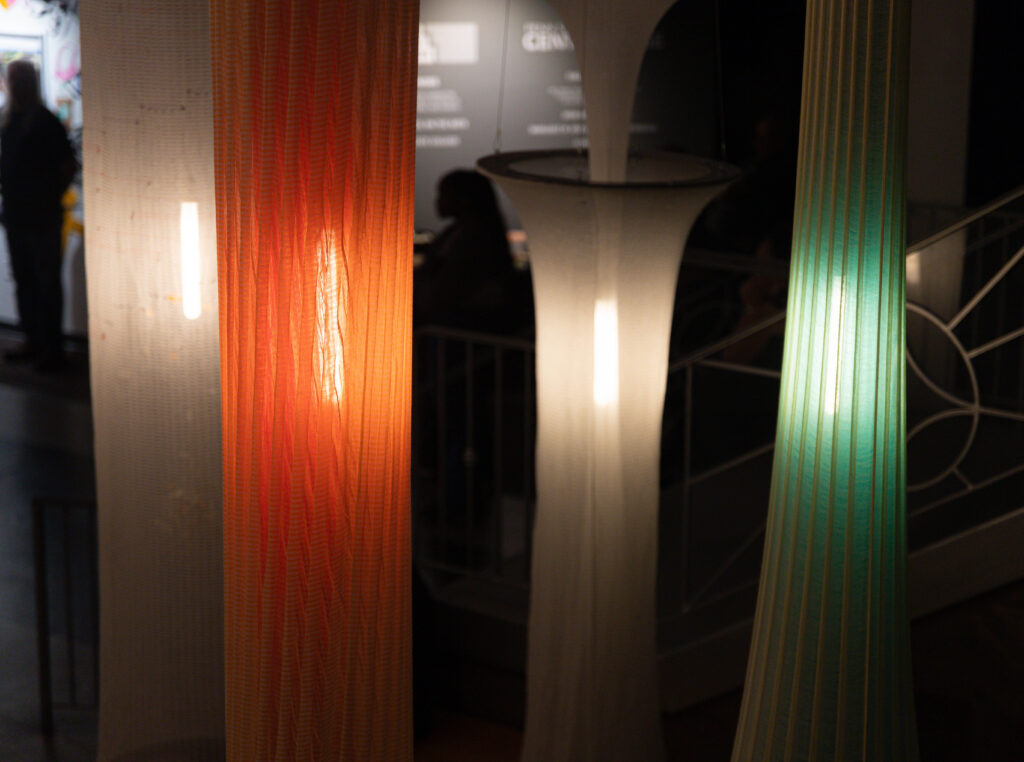
Responsive textiles are materials that transform shape, color or size based on environmental cues, using either sensors and microcontrollers or the natural properties of the materials themselves to communicate information or alter their surroundings. In the field of architecture, these textiles can be used to create both temporary and permanent shelters that have the potential to open and close to let more air through, or change their shape to provide more coverage from sunlight or provide more privacy, for example. These textiles and their responses are changing how we communicate, socialize and utilize space.
The work presented in this article shows two phases of work on tensioned, knitted textile tubes, completed 12 years apart by Davis and Dumitrescu. In that time, they have worked to eliminate sensors that required electronic microcontrollers to transform the fabric to working with water and changes in the environment to initiate responsiveness in the fabric.
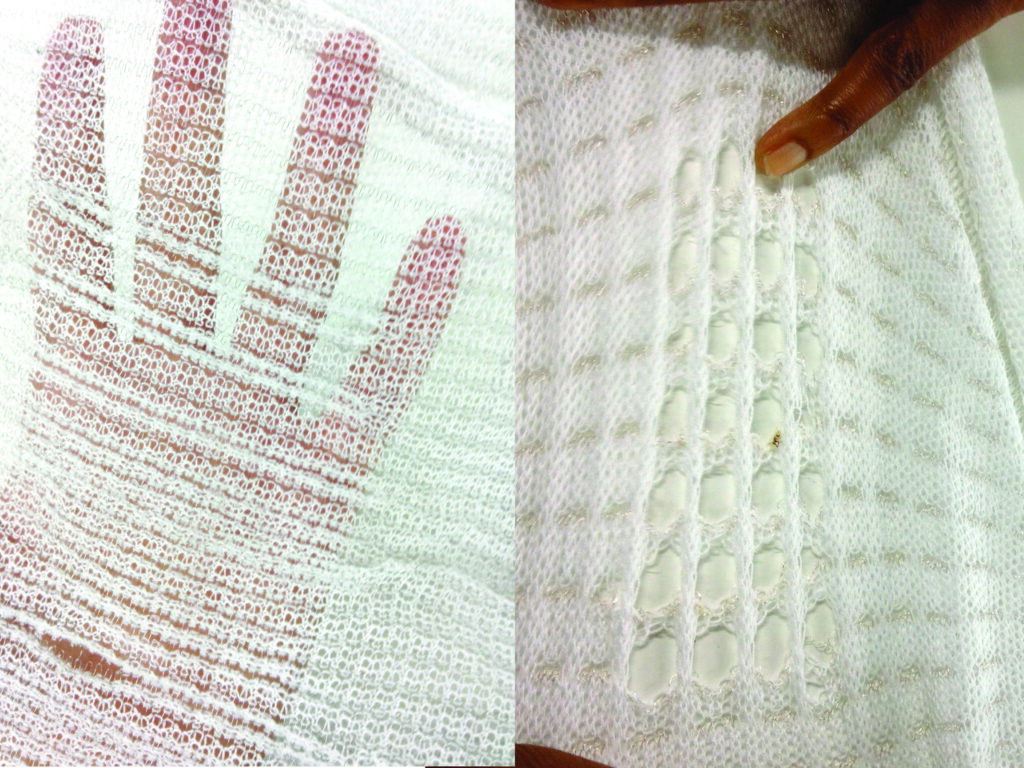
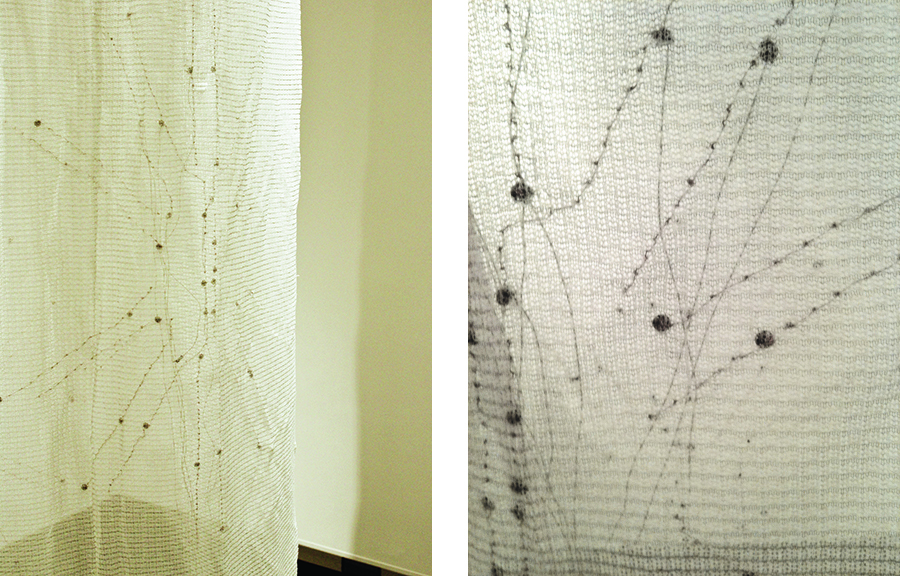
The earlier phase, initiated in 2012, features white textiles that use microcontrollers attached to electronic sensors to alter the fabric’s properties in response to current or heat, which either opens or closes the fabric. This approach patterns the fabric by controlling where and when the electric current flows through the textile. Conductive yarns are knitted in various structural patterns that either open parts of the fabric or close it.
In the case of the opening fabrics Davis and Dumitrescu use Grillon VLT yarn knitted with copper coated yarn in a jersey knit pattern. This knit structure opens in small rips when heated to 60C or 140F). In the case of the closing fabrics Trevira CS Pemotex yarn was used with a stainless-steel yarn. The examples in this article show tension tubes knitted on a circular machine. The Pemotex shrinks 40 percent when heated to 90C.

The current phase, still in progress, explores the use of water to dissolve yarn and open the textile. The new tubes were fabricated on a circular knitting machine and designed so that there were tubes inside of tubes. The red color tube has Polyvinyl Alchohol (PVA) yellow yarn knitted as one long tube with red cotton taking over a second half of the tube. The red cotton tube was then turned inside the yellow PVA exterior tube. The green cotton tube and yellow exterior PVA yarn tube were each knitted as two separate tubes. The PVA yarn tube was knitted with floats in between to keep the knit fabric from totally falling away. The images here show tension tubes with PVA knitted on a flatbed knitting machine.
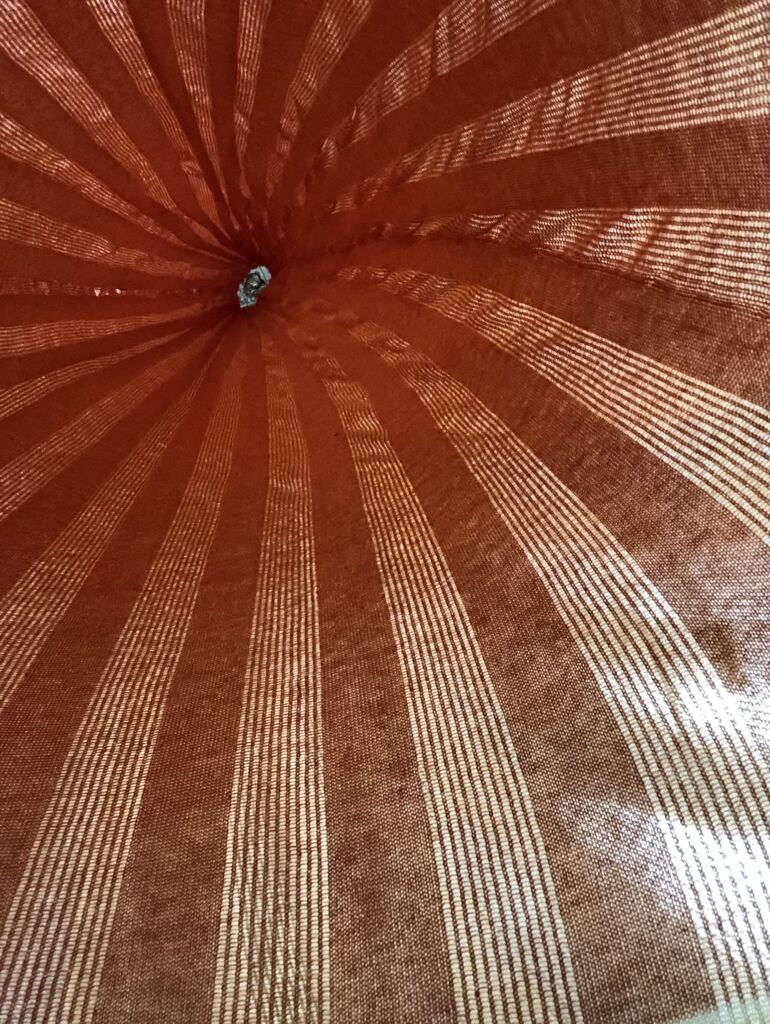

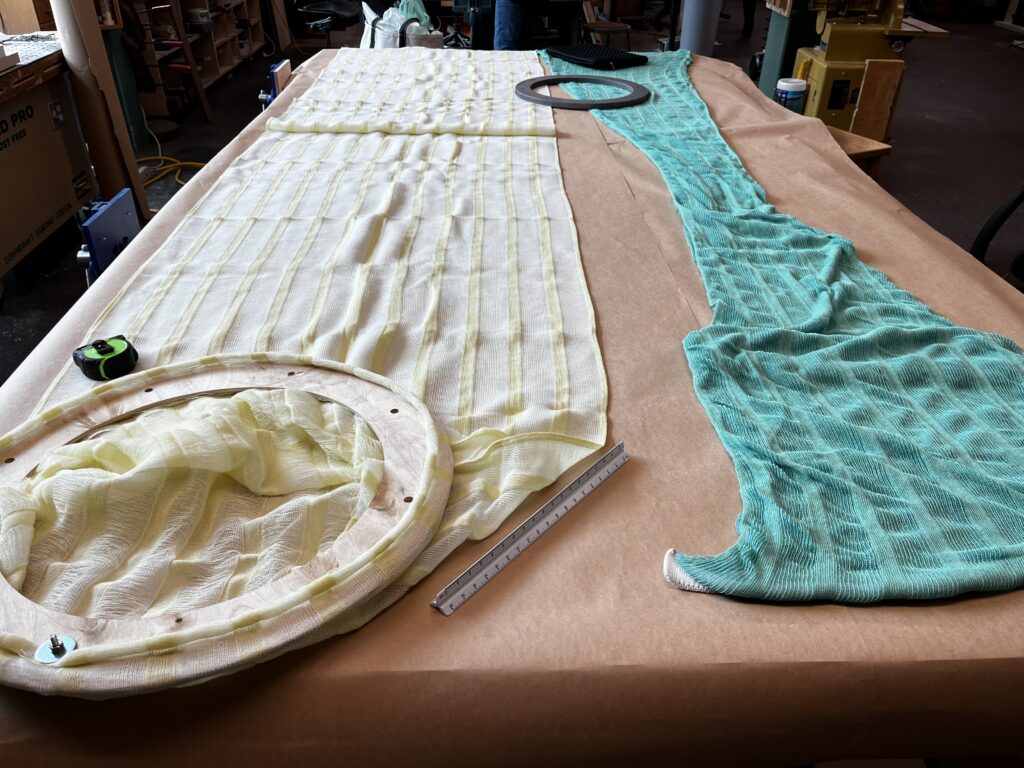
These knitted tubes feature a vision of architectural materials that are ephemeral and respond to the environmental conditions. Both heating and water application result in irreversible transformations of the fabric. Through this project, Davis, a designer trained as an engineer and architect, and Dumitrescu, a textile designer, ask the questions: “How can we design lightweight responsive textiles for architectural applications that use more sustainable materials?” And “how can these textiles adapt and transform in response to environmental conditions?”
Patterning with Heat and Water team members include Setareh Farashzadeh and Hiranshi Patel, Penn State Architecture, Stuckeman School of Architecture, Landscape Architecture and Graphic Design; Irena Potochny, Penn State Material Science; and North Carolina State University, Wilson College of Textiles, Textile Engineering.
Dr. Felecia Davis is an Associate Professor in the Dept. of Architecture in the Stuckeman School for Architecture, Landscape Architecture and Graphic Design. She is the director of the computational textiles lab SOFTLAB and acting director of the Stuckeman Center for Design Computing.
Dr. Delia Dumitrescu is Professor, Dept. of Design, Faculty of Textiles, Engineering and Business, the Swedish School of Textiles, and chair of the Artistic Research and Education Board.