 TEXTILES.ORG




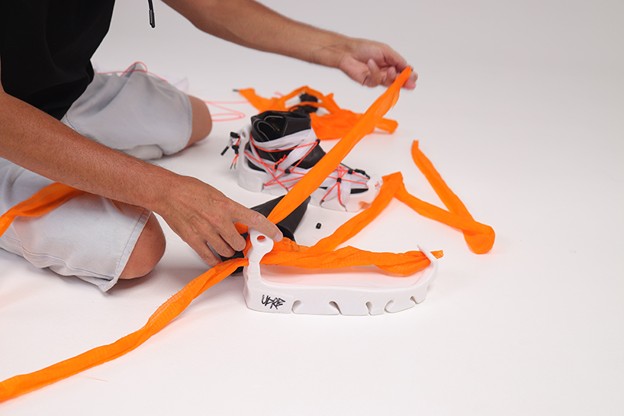
Almaty, Kazakhstan-based designer Daniyar Uderbekov revisits UDRB, a modular sneaker system that rethinks conventional footwear construction through a glue-free assembly method. The design combines a 3D printed TPU sole, a leather inner boot inspired by traditional Central Asian Makhsi and Ichigi footwear, and a rope-based fastening system. Each component can be separated, repaired, replaced and recycled, creating an alternative to the single-piece construction commonly used in contemporary sneakers.
The project explores the relationship between traditional craftsmanship and digital fabrication, using historical footwear techniques as a reference point for a circular design approach. Instead of relying on permanent adhesives that complicate repair and recycling, UDRB is designed as a disassembling system in which each element has a specific function within the overall structure.
UDRB consists of three primary components: a 3D printed TPU sole, a leather sock-boot, and a rope-and-parachute-fabric fastening system. The sole is produced through additive manufacturing, allowing its form and cushioning properties to be adjusted according to individual foot requirements. Made from recyclable thermoplastic polyurethane, the component can be reprocessed and printed again when necessary.
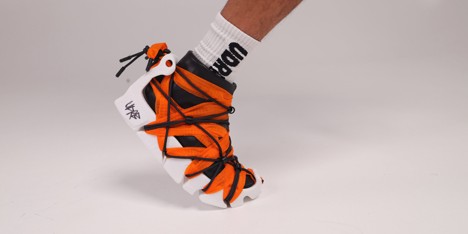
Integrated into the sneaker system, the leather inner boot component provides ventilation and comfort while maintaining the possibility of being worn independently as a lightweight indoor or outdoor shoe. The fastening system replaces conventional laces with climbing rope and parachute fabric, materials selected for their durability, adjustability and connection to Almaty’s mountainous landscape. Threaded beneath the sole and wrapped around the foot, the system secures the shoe while allowing the fit to be modified.
Through the combination of 3D printing and traditional leather craftsmanship, UDRB examines how footwear can incorporate both contemporary manufacturing methods and regional material knowledge. The modular system proposes a model of use based on maintenance, adaptation, and longevity, positioning shoes as repairable objects that can evolve over time instead of being discarded after wear.